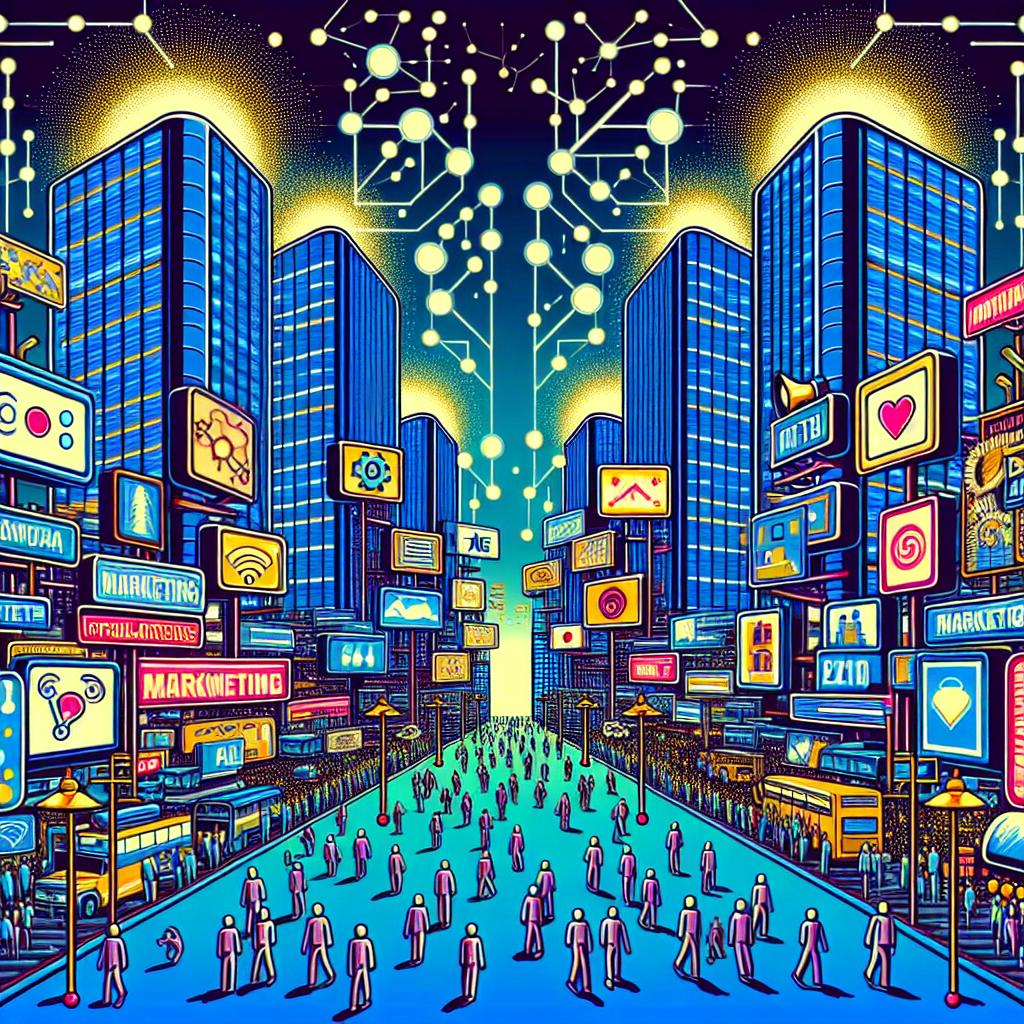
The Delicate Dance: AI’s Edge in Marketing
Artificial intelligence (AI) has undeniably opened up a Pandora’s Box of possibilities in marketing. We’re talking about automation that once seemed like science fiction, personalization that borders on prescience, and analytics that can predict customer behavior with spooky accuracy. But this newfound power comes with a crucial question: How far is too far? Are we, as marketers, equipped to navigate the ethical minefield that AI presents?
Personalization or Intrusion?
Hyper-personalization is the holy grail of modern marketing. AI allows us to tailor messages, offers, and experiences to individual customers like never before. But where does personalization cross the line into feeling invasive or creepy? Imagine receiving an ad for a product you only mentioned in a private conversation – that’s the kind of scenario that can erode trust and damage your brand.
The key is transparency. Customers should understand how their data is being collected and used. Provide clear opt-in options and respect their privacy preferences. Avoid making assumptions or drawing conclusions based on incomplete or inaccurate data.
The Perils of Predictive Policing in Marketing
AI algorithms can analyze vast amounts of data to predict future customer behavior. This can be incredibly useful for targeting ads and optimizing marketing campaigns. However, it can also lead to discriminatory practices. For example, an AI algorithm might identify certain demographics as being less likely to purchase a product and exclude them from marketing campaigns. This is not only unethical but also potentially illegal.
Marketers need to be aware of the potential for bias in AI algorithms. Regularly audit your AI systems to ensure they are not perpetuating discriminatory practices. Use diverse datasets to train your algorithms and avoid relying on proxies that could lead to unfair outcomes.
Automated Content Creation: Authentic or Artificial?
AI can now generate various forms of marketing content, from blog posts to social media updates. While this can save time and resources, it raises questions about authenticity. Are we sacrificing quality and originality in the name of efficiency? Will customers be able to tell the difference between content created by a human and content generated by an AI?
The best approach is to use AI as a tool to augment human creativity, not replace it. Use AI to generate ideas, research topics, and automate repetitive tasks. But always have a human editor review and refine the content to ensure it meets your brand’s standards and reflects your unique voice.
The Slippery Slope of Influence
AI-powered marketing can subtly influence customer behavior through carefully crafted messages and personalized recommendations. While persuasion is a legitimate marketing tactic, it’s important to avoid manipulative or deceptive practices. Don’t exploit customer vulnerabilities or use AI to create echo chambers that reinforce biases.
Staying on the Right Side of the Line
Navigating the ethical landscape of AI-driven marketing automation requires careful consideration, a proactive approach, and a commitment to transparency and responsible innovation. Here are some key principles to guide your decision-making:
- Prioritize transparency: Be upfront with customers about how you are using AI and collecting their data.
- Respect privacy: Provide clear opt-in options and honor customer preferences.
- Avoid bias: Regularly audit your AI systems to ensure they are not perpetuating discriminatory practices.
- Maintain authenticity: Use AI to augment human creativity, not replace it.
- Be mindful of influence: Avoid manipulative or deceptive practices.
By adhering to these principles, you can harness the power of AI to create effective marketing campaigns without crossing the line into ethically questionable territory. Remember, building trust and maintaining a positive brand reputation are essential for long-term success.
