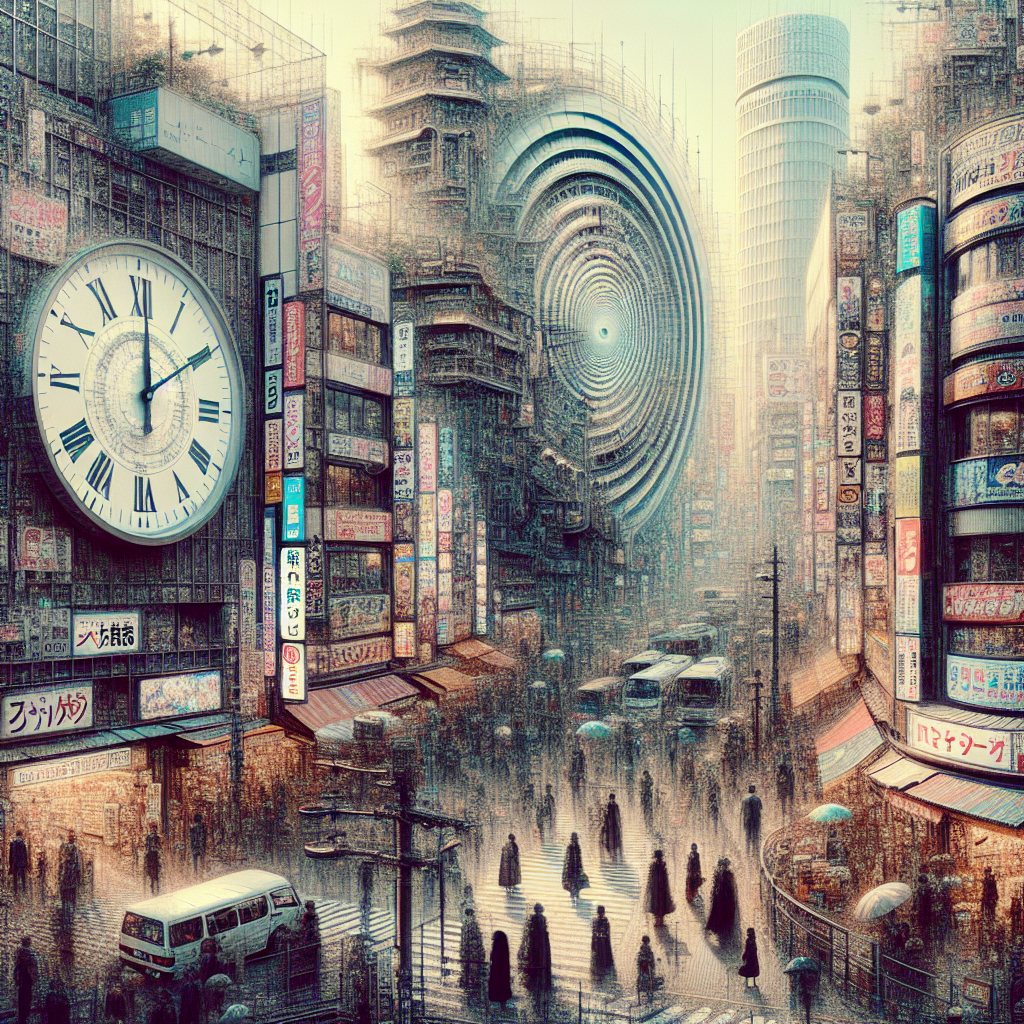
Akihabara Electric Town Glitch: A Micro-Novel of Chronal Displacement
The energy drink tasted of ozone and fractured timelines. Not the sugary, caffeine-laden concoction I craved in Akihabara, Tokyo’s Electric Town, amidst the cacophony of arcade sounds and the glow of LED displays, but a sterile, metallic tang that hinted at something fundamentally broken.
I’d come to Akihabara seeking oblivion, a temporary escape from the crushing weight of routine. The neon-drenched streets, the anime figurines with their imploring eyes, the flashing game screens – all promised a distraction, a fleeting moment of manufactured joy. Instead, I found something far stranger, something unsettlingly real.
It started subtly. A repeated phrase echoing from a maid café, the same advertisement looping on a giant screen, a shop assistant asking the same question I’d heard moments before. Minor glitches, easily dismissed as coincidence in the sensory overload of Akihabara. But they accumulated, intensified, until the fabric of reality seemed to fray at the edges.
I bought a can of ‘Voltage Burst’ from a vending machine, the metallic taste clinging to my tongue. As I walked past a multi-story arcade, I saw myself reflected in the glass, several times, each slightly out of sync, like badly aligned mirrors. One of them was already several meters down the street, another still reaching for the can. The taste of ozone intensified. The fractured reflections danced, multiplied.
Panic clenched my chest. I tried to retrace my steps, to find a point of divergence, a moment where the timeline split. Each turn brought me back to the same garishly lit street corner, the same looping advertisement, the same phrase echoing from the maid café. It was a digital Möbius strip, a looping GIF of urban despair.
The Source Code
I sought refuge in a retro game store, hoping the familiar pixelated landscapes would offer a sense of grounding. But even here, the glitch persisted. Cartridges repeated, shelves duplicated, the store owner’s vacant smile morphing into a grotesque parody of itself.
A young woman with rainbow-colored hair, her face obscured by a surgical mask, bumped into me, scattering a handful of loose arcade tokens. “Careful,” she muttered, her voice distorted by the mask. “The code is unstable here.”
I stared at her, my mind reeling. “Code? What code?”
She glanced around nervously. “They’re rewriting the simulation. Patching the glitches. Don’t let them catch you.” And with that, she vanished into the maze of shelves, leaving me alone with my terror and the persistent taste of ozone.
Rewriting the simulation. The phrase echoed in my mind, a chilling explanation for the unraveling reality. Was Akihabara, this vibrant, chaotic hub of technology and culture, merely a construct, a digital illusion on the verge of collapse?
I stumbled out of the store, the neon lights assaulting my senses. The crowd seemed to move as a single entity, their faces blurred, their voices a low, humming drone. Were they aware of the glitch? Were they part of the simulation, or were they, like me, trapped within its decaying code?
Escape Vector
I ran, driven by a primal instinct to escape the looping reality. I pushed through the throng, ignoring the startled cries and angry shouts. I needed to find a way out, a break in the matrix, a return to the original timeline.
Then I saw it: a narrow alleyway, shrouded in shadow, untouched by the neon glare. A black void amidst the vibrant chaos. A possible escape vector.
I plunged into the darkness, the ozone taste intensifying, the sounds of Akihabara fading behind me. The alley twisted and turned, leading me deeper into the unknown. I didn’t know where I was going, but anywhere was better than being trapped in that digital loop.
As I emerged from the alley, I found myself on a quiet, residential street, the air still and cool. The sounds of Akihabara were a distant murmur. The taste of ozone began to dissipate. Had I escaped? Or had I merely stumbled into another, equally flawed, simulation?
I looked back at the entrance of the alley. It was gone. Just a solid wall, a brick facade, indifferent to my temporal anxieties. The can of Voltage Burst still clutched in my hand, felt strangely heavy, a concrete proof of the glitch. I crush it. The taste of ozone is gone, replaced by the acrid smell of metal. The journey continues, though where, and when, is yet to be determined. The quest to find a reality untouched by digital interference has only just begun, somewhere beyond the neon glow of Akihabara, far away from the simulation’s source code.
