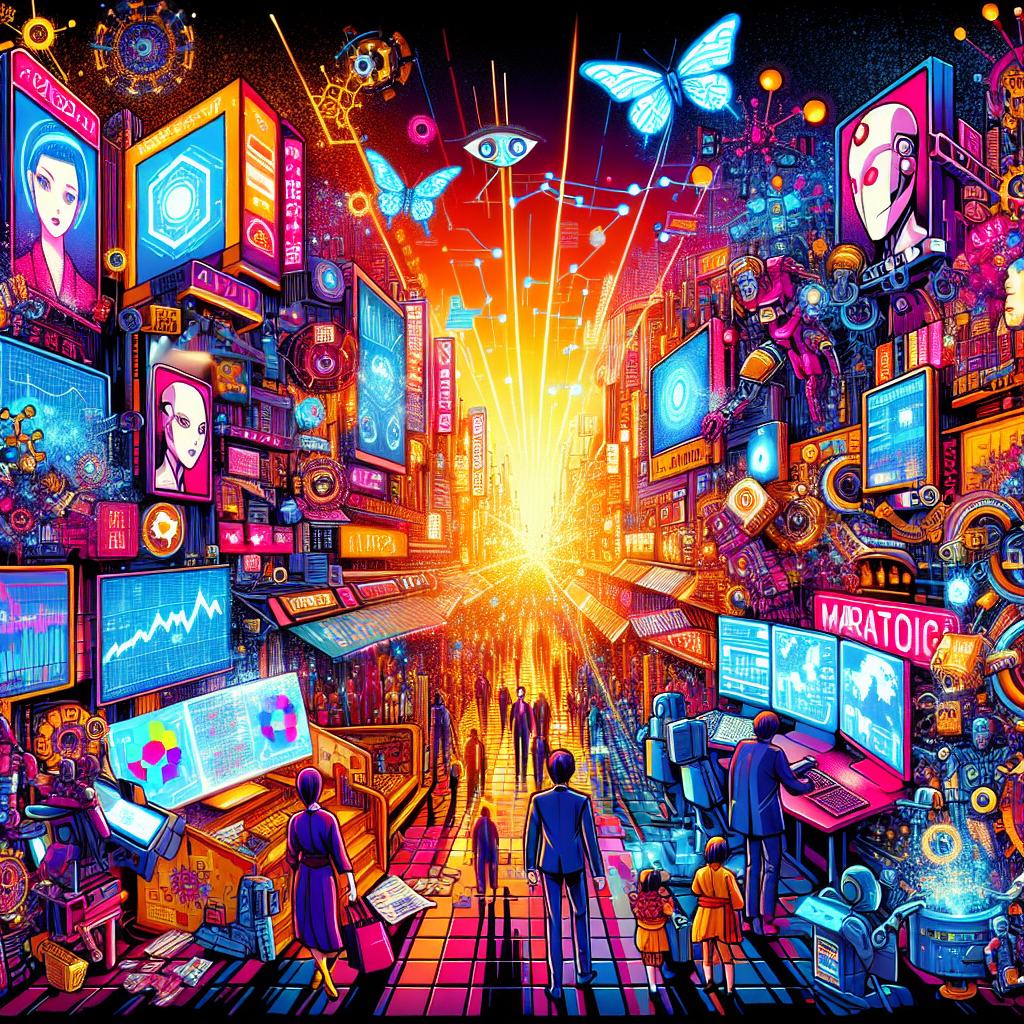
Automated Marketing’s Risky Ventures: AI Tactics That Push the Envelope
Artificial intelligence (AI) has dramatically reshaped the landscape of marketing automation. Businesses now wield unprecedented power to streamline processes, tailor customer interactions, and fuel expansion. But this progress comes with a darker side: the temptation to use AI in ways that blur ethical lines and exploit legal loopholes. This article dives into some of these precarious AI-driven marketing strategies.
Data Scraping and Privacy Concerns
One of the most common, yet ethically questionable, practices is data scraping. AI-powered tools can crawl the web, collecting vast amounts of personal information from social media profiles, online forums, and even publicly available databases. While the information might be technically accessible, using it without explicit consent raises serious privacy concerns. Marketers might argue that they are only using publicly available data, but the scale and sophistication of AI-driven scraping can create detailed profiles of individuals without their knowledge or permission.
These profiles are then used to create highly targeted advertising campaigns. Imagine receiving an ad that eerily reflects a recent conversation you had online, or a product recommendation based on a deep dive into your social media activity. While some users might find this personalization helpful, others may feel deeply violated, leading to a backlash against the brand.
AI-Generated Content and Misinformation
AI can also generate content, from product descriptions to entire articles. While this can save time and resources, it also opens the door to the spread of misinformation. AI algorithms are trained on existing data, which may contain biases or inaccuracies. If not carefully monitored, AI-generated content can perpetuate stereotypes, promote false claims, or even be used to create fake news. The line between helpful marketing and deceptive practices becomes incredibly thin.
Consider the use of AI to write product reviews. A company could use AI to generate hundreds of positive reviews, even if the product is subpar. This can mislead potential customers and damage the reputation of legitimate businesses. Detecting AI-generated content is becoming increasingly difficult, making it harder to combat this form of deception.
Exploiting Psychological Vulnerabilities
AI algorithms can analyze vast amounts of data to identify psychological vulnerabilities in individuals. This information can then be used to create highly persuasive marketing campaigns that exploit these weaknesses. For example, someone struggling with body image issues might be bombarded with ads for weight loss products or cosmetic surgery. While targeted advertising is not inherently unethical, using AI to specifically prey on vulnerabilities crosses a line.
Another example is the use of AI to create personalized pricing. An algorithm might analyze your browsing history and determine that you are willing to pay more for a particular product. The price you see might be higher than what other customers are offered, even if there is no legitimate reason for the difference. This practice, known as dynamic pricing, can be seen as exploitative, especially if it is not transparent.
The Regulatory Landscape
The legal and regulatory landscape surrounding AI in marketing is still evolving. Many countries are grappling with how to regulate the use of AI to protect consumer privacy and prevent deceptive practices. The General Data Protection Regulation (GDPR) in Europe is one example of a law that aims to give individuals more control over their personal data. However, enforcing these regulations can be challenging, especially when AI-driven marketing campaigns operate across borders.
It is the responsibility of businesses to use AI ethically and responsibly. This means being transparent about how AI is being used, obtaining consent from individuals before collecting and using their data, and ensuring that AI-generated content is accurate and unbiased. Failure to do so can lead to legal repercussions, reputational damage, and a loss of customer trust.
The future of AI in marketing depends on finding a balance between innovation and ethics. By prioritizing transparency, fairness, and respect for individual privacy, businesses can harness the power of AI to create marketing campaigns that are both effective and ethical.
