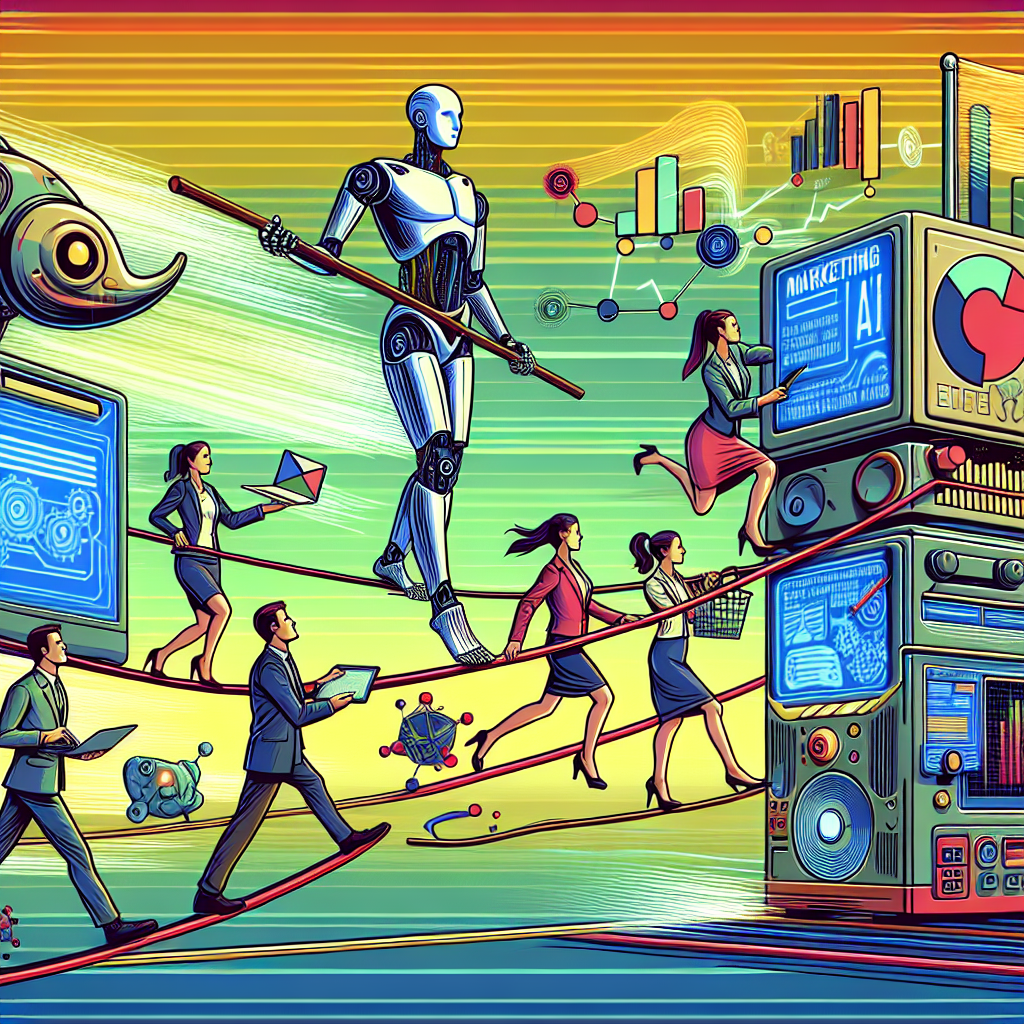
The Murky World of Automated Marketing and AI
Artificial intelligence (AI) has undeniably transformed marketing automation, providing businesses with powerful tools to enhance efficiency, personalize customer experiences, and drive growth. However, this rapid evolution has also led to the emergence of questionable tactics that push the boundaries of ethical and legal standards. This article delves into some of the more precarious aspects of AI-driven marketing automation, exploring how companies are leveraging AI in ways that might raise eyebrows.
Data Acquisition and Privacy Concerns
One of the primary areas where AI-driven marketing treads on thin ice involves data acquisition. AI algorithms require vast amounts of data to function effectively, and the methods used to obtain this data are not always transparent or ethical. For instance, some companies employ web scraping techniques to gather information from social media platforms and other online sources without users’ explicit consent. This data is then used to build detailed profiles of potential customers, enabling highly targeted advertising campaigns.
Furthermore, the use of cookies and tracking pixels to monitor online behavior raises significant privacy concerns. While many websites provide cookie consent banners, the extent to which users truly understand the implications of accepting these cookies is debatable. AI algorithms can analyze this tracking data to create remarkably accurate predictions about individual preferences and behaviors, which can then be used to manipulate purchasing decisions.
Hyper-Personalization and Manipulation
The promise of hyper-personalization is a key selling point for AI-driven marketing automation. AI algorithms can analyze vast amounts of data to deliver highly targeted messages that resonate with individual customers. However, this level of personalization can quickly cross the line into manipulation. For example, some companies use AI to identify customers who are vulnerable or susceptible to certain types of advertising. This might include individuals who are struggling with financial difficulties or those who are prone to impulsive buying.
By tailoring messages to exploit these vulnerabilities, marketers can exert undue influence over purchasing decisions. This raises serious ethical questions about the responsibility of companies to protect vulnerable consumers from manipulative advertising tactics. The use of AI to create deepfakes or synthetic content that impersonates real people is another area of concern. These technologies can be used to create highly persuasive endorsements or testimonials that are entirely fabricated, deceiving consumers and undermining trust in the marketplace.
Algorithmic Bias and Discrimination
AI algorithms are trained on data, and if that data reflects existing biases, the algorithms will perpetuate and amplify those biases. This can lead to discriminatory outcomes in marketing campaigns, where certain groups are unfairly targeted or excluded. For instance, an AI algorithm trained on historical data that reflects gender or racial stereotypes might be used to target specific products or services to certain demographic groups, reinforcing those stereotypes.
Similarly, AI algorithms used for credit scoring or loan applications can perpetuate existing inequalities by unfairly denying opportunities to certain groups. Addressing algorithmic bias requires careful attention to data quality, algorithm design, and ongoing monitoring to ensure fairness and transparency.
Lack of Transparency and Accountability
One of the biggest challenges in regulating AI-driven marketing automation is the lack of transparency. Many AI algorithms are complex and opaque, making it difficult to understand how they make decisions. This lack of transparency makes it challenging to hold companies accountable for the ethical implications of their AI-powered marketing tactics.
Furthermore, the use of automated systems can create a diffusion of responsibility, where no single individual is ultimately accountable for the decisions made by the algorithm. To address this issue, it is essential to develop clear ethical guidelines and regulatory frameworks that promote transparency and accountability in AI-driven marketing. This might include requiring companies to disclose the use of AI in their marketing campaigns, providing consumers with the ability to opt-out of AI-driven personalization, and establishing independent oversight bodies to monitor and enforce ethical standards.
The Global Landscape of AI Marketing Regulations
Regulations surrounding AI marketing vary significantly across different countries and regions. Some jurisdictions have implemented strict data privacy laws, such as the General Data Protection Regulation (GDPR) in Europe, which place significant restrictions on the collection and use of personal data. Other regions have adopted a more laissez-faire approach, allowing companies greater freedom to experiment with AI-driven marketing tactics.
This patchwork of regulations creates a complex and challenging environment for businesses operating on a global scale. Companies must carefully navigate the legal and ethical landscape in each jurisdiction where they operate, ensuring that their AI-driven marketing campaigns comply with local laws and regulations. Failure to do so can result in significant fines, reputational damage, and legal challenges.
In conclusion, AI-driven marketing automation offers tremendous potential for businesses to enhance efficiency, personalize customer experiences, and drive growth. However, it also raises serious ethical and legal concerns. By carefully considering the potential risks and implementing appropriate safeguards, companies can harness the power of AI while upholding ethical standards and protecting consumer rights.
