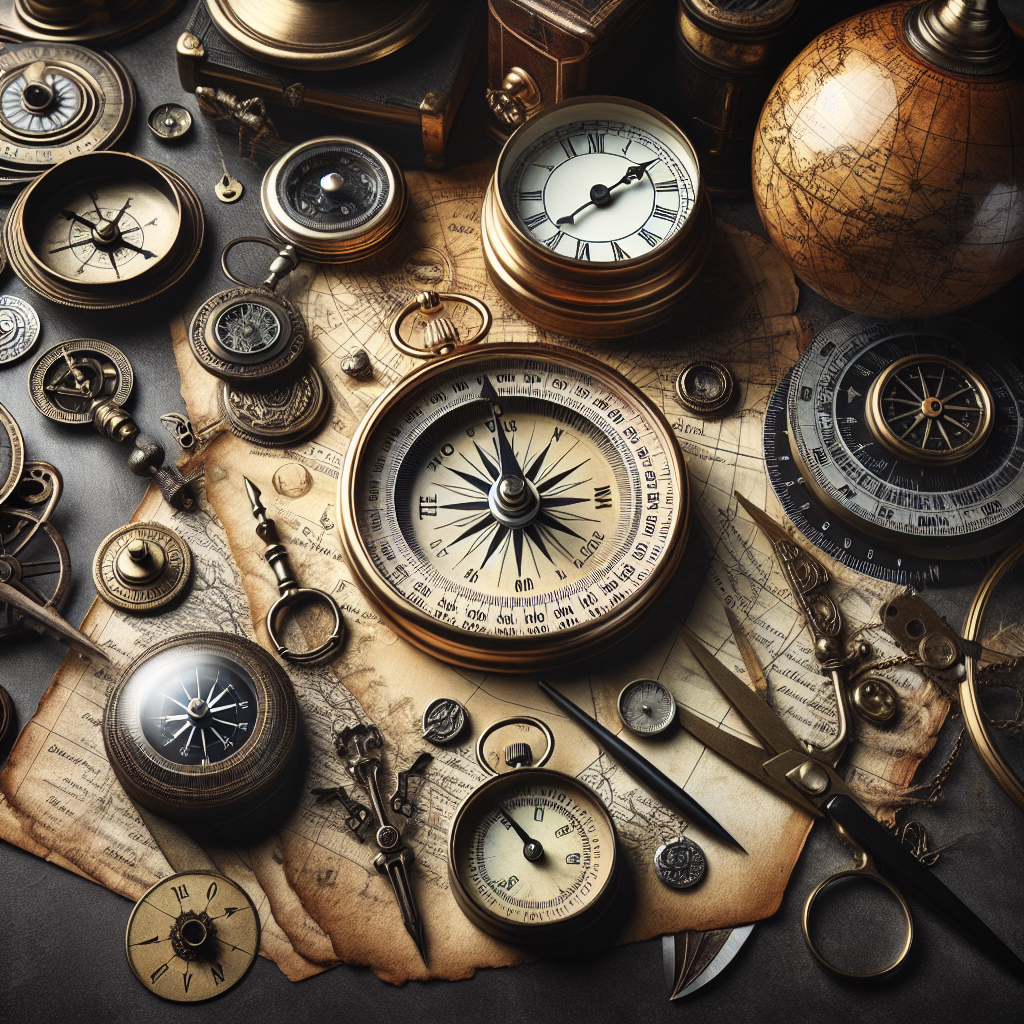
The Chronometric Compass
The rain tasted of copper and unwritten futures. Not the sharp, metallic tang of a coming storm, but the dull, persistent ache of possibilities collapsing inward. I spat onto the cracked pavement, the city lights blurring into an indistinct smear of sodium and despair.
I pulled the chronometric compass from my coat pocket. Its needle, usually spinning wildly, now trembled erratically, a broken insect pinned under glass. Damn it, I thought, the taste of copper intensifying on my tongue. Another fracture.
The compass had been my grandfather’s, a relic from a time when manipulating temporal currents was more than just a theoretical exercise. He’d warned me about the dangers, the subtle paradoxes that could unravel entire realities. I hadn’t listened, of course. Youth is wasted on the reckless.
My initial forays had been small: nudging stock prices, influencing election outcomes. Nothing significant, I’d told myself. Just a little…tweaking. But the ripples spread, the timelines diverged, and now the city itself was beginning to glitch. Buildings flickered in and out of existence. Faces shifted and reformed in the crowd.
I needed to find the nexus point, the source of the instability. The compass, even in its broken state, was my only guide. It pulsed faintly, leading me down a narrow alley, the stench of decay heavy in the air.
The alley opened into a small, abandoned courtyard. In the center stood a crumbling fountain, its basin filled with stagnant water. And beside the fountain, a figure cloaked in shadows.
“You shouldn’t have come here,” the figure said, its voice a raspy whisper. “This is where the timelines converge. Where everything begins…and ends.”
I recognized the voice. It was my own, distorted and aged. My future self.
“You were warned,” the older me continued. “The past is immutable. The future, inevitable. You cannot change what is meant to be.”
“But I wanted to fix things,” I said, my voice trembling. “I wanted to make things better.”
“Better for whom?” he sneered. “Every action has a consequence. Every change creates a new imbalance.”
He raised his hand, revealing a device identical to my compass, only larger, more powerful. “The only way to restore balance is to erase the divergence. To collapse the timelines back into a single, unbroken stream.”
“You mean…destroy everything?”
“Everything that shouldn’t be,” he corrected. “The aberrations. The paradoxes. The mistakes.”
He activated the device. A wave of energy emanated from it, rippling through the courtyard, distorting the air. The city around us began to crumble, buildings dissolving into dust, memories fading into nothingness.
I knew what I had to do. I lunged at my future self, knocking the device from his hand. It clattered to the ground, the energy wave faltering, the destruction momentarily halted.
We wrestled, two versions of the same man, fighting for the fate of reality. The rain intensified, washing away the debris, blurring the lines between past and future. I managed to grab my compass from my pocket, and with a surge of adrenaline, smashed it against his device. The impact created a blinding flash of light, followed by an earsplitting screech.
Then, silence.
I opened my eyes. The rain had stopped. The courtyard was gone. I was standing on a street corner, the city lights shimmering around me. The taste of copper was gone, replaced by the clean, crisp scent of rain-washed asphalt.
Had it all been a dream? A hallucination? I checked my pocket. The compass was gone. My coat was damp, but otherwise, nothing seemed amiss.
But then, I saw it. Reflected in a shop window. A fleeting glimpse of my future self, standing across the street, watching me. He smiled sadly, then vanished into the crowd.
The Unwritten Future
I knew then that I hadn’t erased the divergence. I had merely shifted it. Created a new timeline, one where I was forever haunted by the ghost of what could have been. And the rain tasted of something new: a faint, lingering echo of regret, mixed with a strange, unsettling hope.
