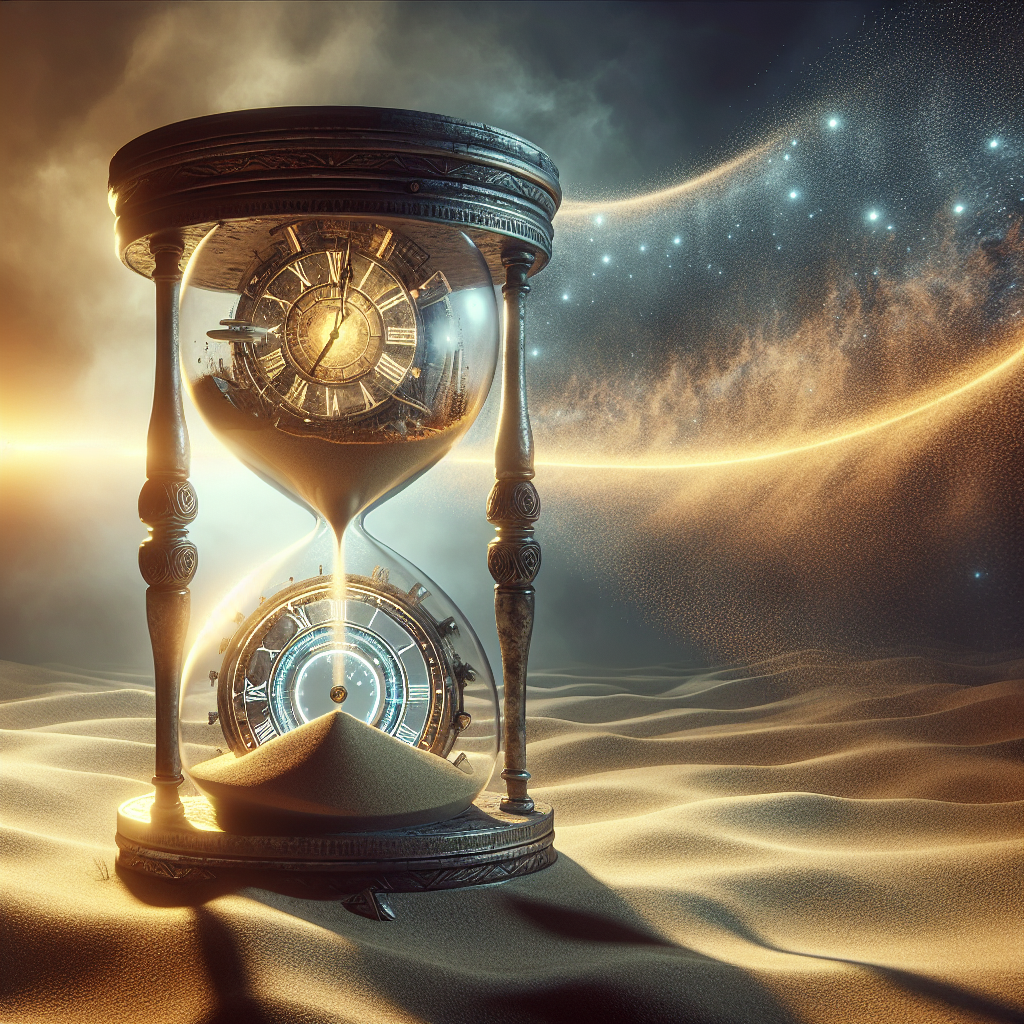
The Chronarium Conundrum
The rain tasted of ozone and obsolescence. Not the sharp, clean tang of an approaching electrical storm, but the stale, synthetic aftertaste of discarded technology. I glanced at my wrist, at the Chronarium – a relic from a bygone era, a beautiful anachronism of gears and vacuum tubes in a world obsessed with quantum entanglement. It was ludicrously oversized, yet stubbornly reliable, its brass casing cold against my skin.
The alley reeked of discarded synth-noodles and desperation. Neon signs flickered erratically, casting long, distorted shadows that danced like restless spirits. I was here, again. The same alley, the same rain, the same oppressive sense of impending doom. It had been…how long now? Hours? Days? Time had become a smeared canvas, the colors bleeding into one another, the original image obscured by layers of repetition.
It started innocently enough. A misplaced step, a carelessly worded wish, a temporal anomaly detected by the Chronarium’s archaic sensors. Suddenly, I was reliving the same few hours, trapped in a loop, the world a broken record skipping on the same groove.
My initial reaction was panic. I tried everything to break free. I ran, I fought, I reasoned, I pleaded. I altered my actions, made different choices, sought different outcomes. But the loop held firm, an invisible cage constructed of causality and regret.
The Bitter Truth
Then came acceptance. Or perhaps it was resignation. I began to observe, to analyze. I studied the other players in this temporal drama – the greasy street vendor hawking questionable delicacies, the couple arguing in hushed tones beneath a flickering streetlight, the shadowy figure lurking in the doorway across the alley. They were all trapped too, I realized, puppets in a play written by the cruel hand of time.
I started to experiment, to push the boundaries of the loop. I robbed the street vendor (he didn’t seem to notice), I eavesdropped on the arguing couple (their problems were far more mundane than mine), I confronted the shadowy figure (he turned out to be a holographic advertisement for cybernetic enhancements).
The Chronarium hummed softly, a constant reminder of my predicament. It was more than just a timekeeping device; it was a key, a map, a compass in this temporal labyrinth. I started to decipher its readings, to understand the subtle fluctuations in the chronal currents.
The key, I suspected, lay in the ozone rain. Each cycle, its metallic taste seemed to shift, to evolve. It was a subtle difference, almost imperceptible, but the Chronarium registered it, tracking the anomaly with its intricate network of gears and vacuum tubes.
The Exit
On what felt like the hundredth iteration, the rain tasted…different. Not ozone, not obsolescence, but something akin to burnt sugar and forgotten memories. The Chronarium’s needle flickered wildly, its gears grinding against one another in protest. This was it, I knew. The point of divergence.
I took a deep breath, the humid air filling my lungs. I closed my eyes and focused on the feeling, on the subtle shift in the texture of reality. And then I stepped forward, into the unknown.
When I opened my eyes, the alley was gone. The rain had stopped. The city was silent, bathed in the pale light of dawn. The Chronarium on my wrist ticked steadily, its gears whirring with newfound purpose. Had I escaped the loop? Or simply entered another, more elaborate one? I couldn’t be sure.
But the rain, I noticed, tasted like nothing at all.
