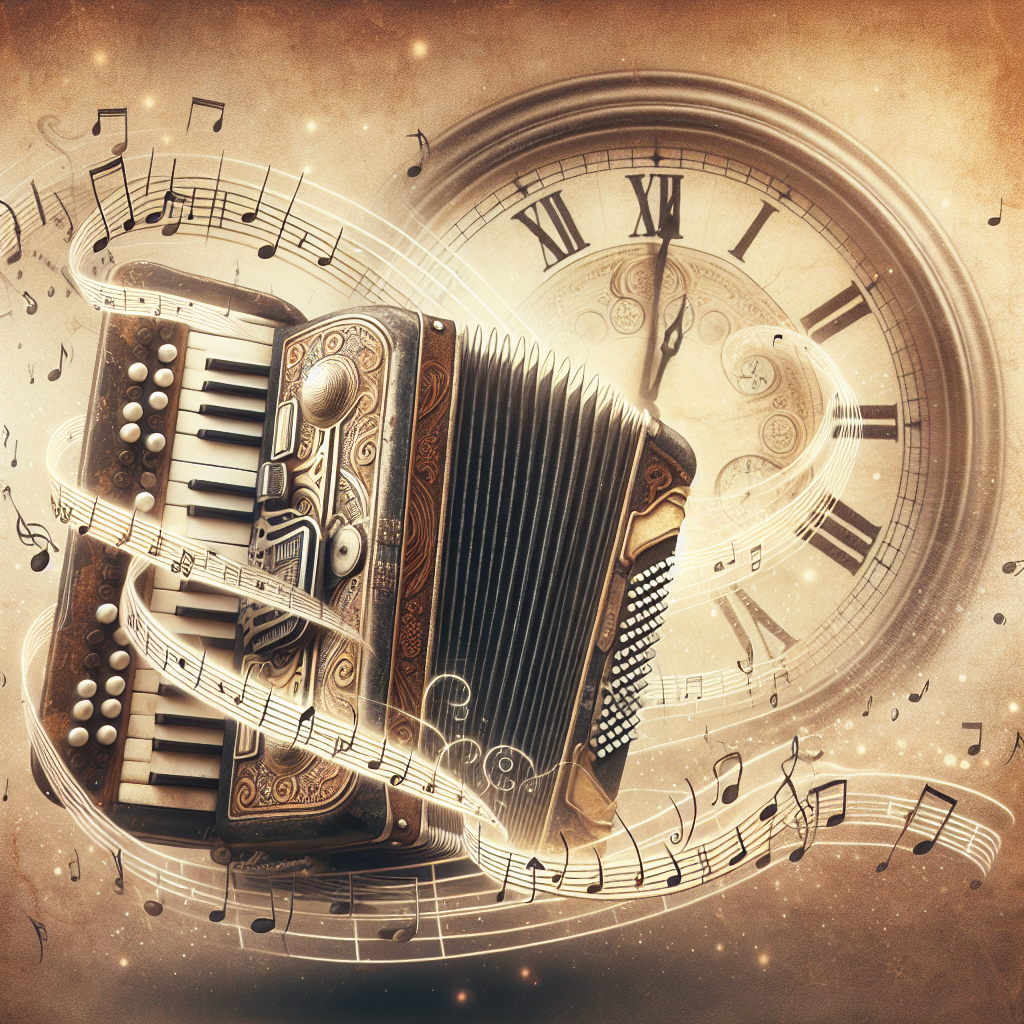
The Anachronistic Accordion: A Retrocausal Rhapsody in Eb Minor
The rain tasted of smoke and regret. It wasn’t the clean burn of a wildfire, but the lingering acridity of a dying ember, clinging to the throat like a forgotten promise. I adjusted the strap of the accordion, its weight familiar against my chest, a constant reminder of the debt I carried.
The alley reeked of stale beer and desperation. Neon signs from the noodle bar across the street cast long, distorted shadows, painting the grimy brickwork in hues of toxic green and electric blue. I unfolded the bellows, the worn leather groaning in protest, a sound not unlike my own weary sigh.
I found him slumped against a dumpster, a figure shrouded in darkness. His face, when I knelt beside him, was pale and gaunt, etched with a weariness that mirrored my own. He clutched a crumpled photograph in his trembling hand – a faded image of a woman with eyes that held the promise of a brighter future.
“Play something,” he croaked, his voice raspy. “Something… sad.”
I obliged. The accordion wheezed to life, filling the alley with a mournful melody in Eb minor. A tune that spoke of lost loves, shattered dreams, and the crushing weight of inevitability. It was a song I’d composed myself, years ago, or perhaps years from now – the timelines had blurred beyond recognition.
As the final note faded into the night, the man looked up, his eyes filled with a strange mix of recognition and despair. “That… that’s her song,” he whispered. “How do you know her song?”
I hesitated. The truth was a tangled web, a paradox that threatened to unravel the very fabric of reality. “I… I heard it somewhere,” I lied. “It’s an old tune.”
He shook his head slowly, a single tear tracing a path down his weathered cheek. “No,” he said. “It can’t be. She hasn’t written it yet.”
That’s when I knew. He wasn’t just a lost soul seeking solace in music. He was a ripple in the time stream, a consequence of my own reckless meddling with forces I didn’t understand. He was the reason I was here, in this rain-soaked alley, playing a song that hadn’t been written yet, for a man who shouldn’t have known it.
The Accordion’s Secret
The accordion wasn’t just an instrument. It was a key. A conduit. A cursed artifact that allowed me to manipulate the delicate threads of time. I’d found it in a dusty antique shop, tucked away in a forgotten corner. The shopkeeper, a wizened old woman with eyes that seemed to hold centuries of secrets, had warned me about its power. But I hadn’t listened. I’d been too eager, too blinded by the allure of rewriting my own past.
Now, I was paying the price. The man in the alley was a walking paradox, a living testament to my folly. His existence threatened to unravel the timeline, creating a catastrophic cascade of unforeseen consequences.
I knew what I had to do. I had to erase him. Not physically, but temporally. I had to ensure that he never heard the song, that he never knew about the woman who hadn’t written it yet. I had to break the loop, even if it meant sacrificing a piece of myself in the process.
I closed my eyes, took a deep breath, and began to play again. This time, the music was different. It was a dissonant cacophony, a jarring assault on the senses, designed to disrupt the flow of time. The alley shimmered, the neon lights flickered, and the man’s form began to waver, like a mirage in the desert.
When I stopped playing, he was gone. The photograph lay on the ground, blank and faded. The alley was silent, save for the relentless drumming of the rain.
I had fixed it. Or so I thought. But as I walked away, I couldn’t shake the feeling that I had only delayed the inevitable. The accordion was still there, heavy on my chest. And the rain still tasted of smoke and regret, a constant reminder of the song that hadn’t been written yet, and the man who shouldn’t have known it.
The loop was broken, but the echo remained.
