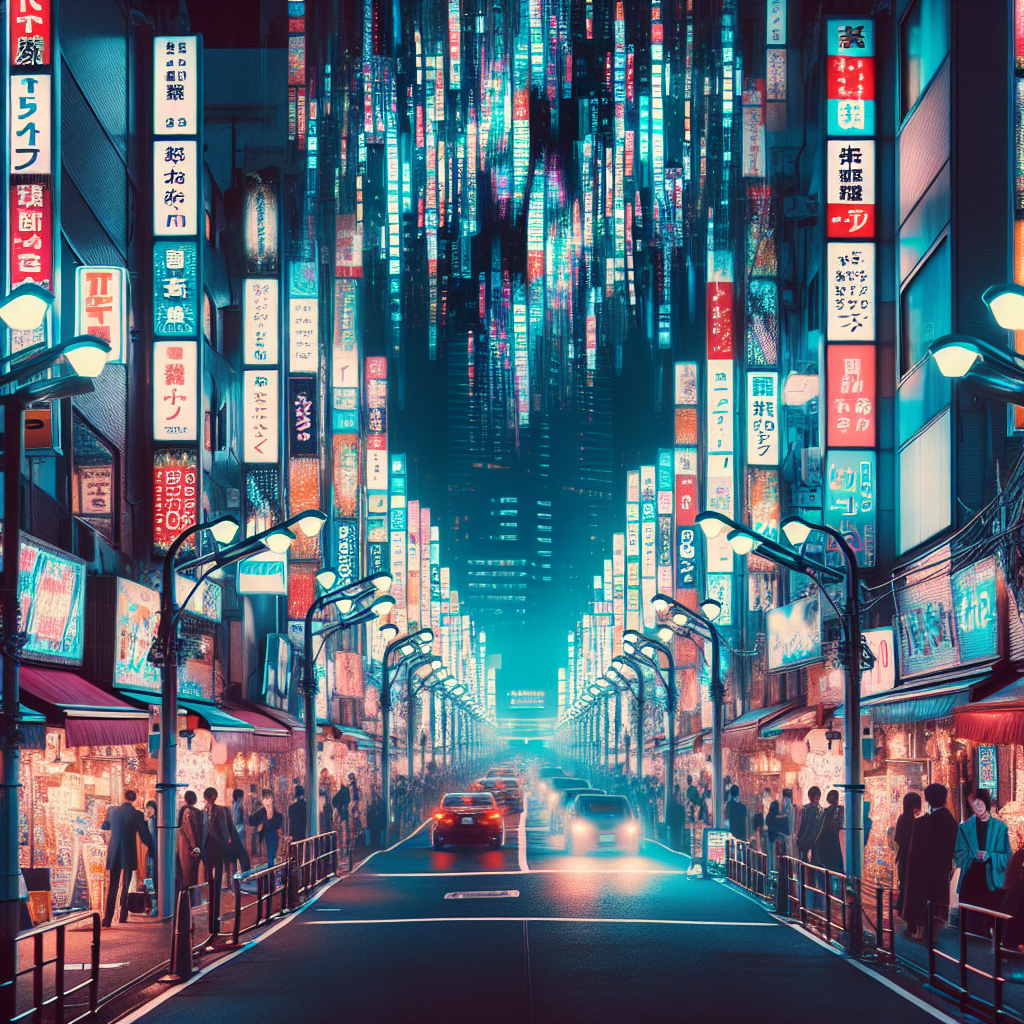
Kabukicho Neon Bleed: A Micro-Fiction
The whiskey tasted of ozone and desperation. Not the smooth, oak-aged warmth I sought after drowning in the Kabukicho neon, but a thin, electric sting, a premonition of unraveling threads. I swirled the amber liquid, the ice clinking a mournful counterpoint to the distant karaoke screams bleeding from a nearby building.
I’d been here before. Or, more accurately, I would be here again. The precise moment of realization was always blurry, a sudden jarring dissonance in the familiar rhythm of the night. One moment, I was another nameless face lost in the urban sprawl. The next, I was acutely aware that the last five hours – the stale cigarette smoke, the hushed whispers of bar hostesses, the insistent bass thrumming from a basement club – were about to replay.
It wasn’t a perfect loop. Details shifted. A different song on the radio, a fleeting glimpse of a face I didn’t recognize, the almost imperceptible scent of jasmine instead of cherry blossom. Enough variation to drive me slowly mad. Enough to offer the tantalizing illusion of escape.
The First Deviation
The first few times, panic consumed me. I tried to break the cycle with grand gestures: confessing long-held secrets to strangers, leaping into the canal, even attempting to flag down a passing police car to confess to a crime I hadn’t committed (yet). Each attempt only reset the loop, sometimes with minor alterations, sometimes with brutal precision.
Eventually, I learned a measure of control. Not control over the loop itself, but control over my actions within it. I became an observer, a ghost haunting the same few city blocks. I watched the same arguments unfold, the same deals go sour, the same hopeful faces slowly dissolve into the urban gloom.
Tonight, though, something felt different. The ozone tang in the whiskey was sharper, the karaoke screams more insistent, the scent of desperation almost overwhelming. I sensed a hairline fracture in the loop, a potential exit shimmering just beyond my grasp.
A Different Path
Instead of re-enacting the night’s script, I walked away from the bar. Not in a rush, not with the frantic energy of my earlier attempts, but with a quiet determination. I turned down a side street, a narrow alley choked with overflowing dumpsters and the shadows of forgotten dreams. The neon glow faded, replaced by a damp, oppressive darkness.
A stray cat, thin and scarred, emerged from the shadows. It watched me with wary eyes, then darted away, disappearing into the labyrinth of alleys. On impulse, I followed.
The alley twisted and turned, leading me deeper into the underbelly of Kabukicho. The air grew thick with the smell of stale beer and urine. The sounds of the city faded, replaced by the rustling of trash and the occasional whisper of wind.
Then, I saw it: a single, flickering light at the end of the alley. Not neon, not harsh fluorescent, but a soft, warm glow emanating from a doorway barely wider than my shoulders.
Hesitantly, I approached. The doorway led to a small, unassuming building. Above the door, a faded sign read: “Repairs.”
Repairs? What could that mean in this context, in this perpetual night?
The Repair Shop
I pushed open the door. A bell jingled softly. Inside, an old man sat hunched over a workbench, surrounded by a chaotic collection of tools, wires, and broken electronics. He looked up, his eyes surprisingly bright behind thick spectacles.
“Lost, are you?” he asked, his voice raspy but kind.
I nodded, unable to speak.
“This place…it fixes things that are broken,” he said, gesturing around the shop. “Not just machines, but…other things too.”
He paused, looking at me intently. “What needs fixing, young man?”
I didn’t know where to begin. But for the first time in what felt like an eternity, I felt a flicker of hope. Perhaps, just perhaps, this was the exit. The way to finally break free from the Kabukicho neon bleed.
The old man smiled, a network of wrinkles deepening around his eyes. “Tell me your story,” he said. “We have all the time in the world.”
