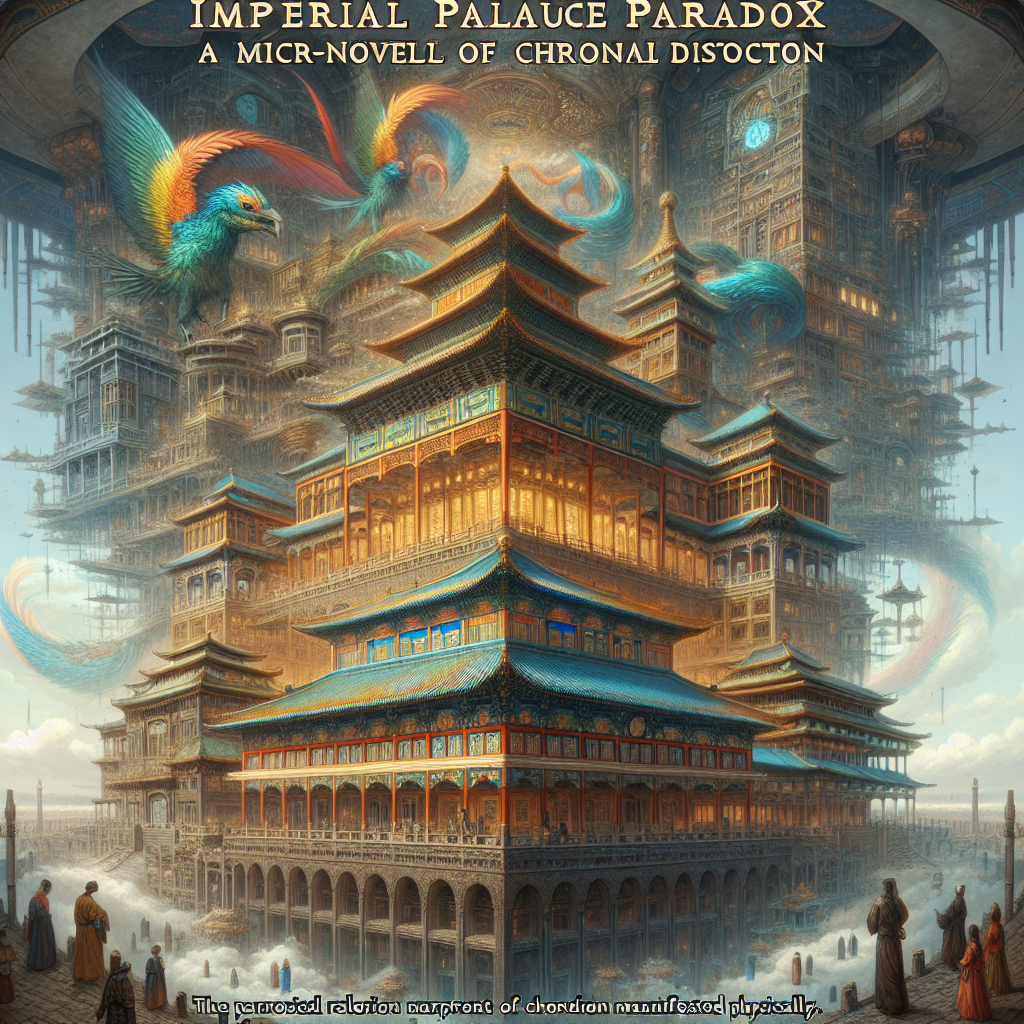
Imperial Palace Paradox: A Micro-Novel of Chronal Distortion
The water tasted of ash and unraveling silk. Not the crisp, clean refreshment I’d expected within the stoic walls of the Imperial Palace East Garden, but a grainy, almost spectral dryness that clung to the roof of my mouth. It was a humid Tokyo afternoon, the kind that blankets the city in a thick, languid heat, but the air here, by the crumbling foundations of a forgotten guardhouse, felt different. Stiller. Thicker.
I’d come seeking respite from the relentless pulse of the city, a moment of quiet contemplation amidst the meticulously manicured lawns and ancient stones. The Imperial Palace, a monument to emperors and centuries of tradition, always offered a sense of grounding, a connection to something enduring. Today, however, it felt…off. As if the very air was vibrating at a slightly different frequency.
A flicker at the edge of my vision. I turned, expecting to see a tourist, perhaps a groundskeeper. Instead, there was only shimmering air, a brief distortion that resolved itself into the familiar silhouette of a gnarled pine tree. But even the pine seemed wrong, its needles a shade too vibrant, its ancient trunk radiating an unnatural heat.
I dismissed it as fatigue, the oppressive humidity playing tricks on my mind. I took another sip of water. Still ash. I checked my watch. The second hand stuttered, skipped, then resumed its normal rhythm. It was then that I noticed the pigeons. Dozens of them, circling the roof of the guardhouse, their cooing morphing into a discordant chorus, a digital screech.
And then, I saw him. A figure dressed in what appeared to be Heian-era robes, standing in the shadow of the guardhouse. He was young, no older than twenty, with striking eyes that held both fear and a profound sense of resignation. He looked directly at me, his gaze piercing through the layers of time that separated us.
“You shouldn’t be here,” he said, his voice a whisper carried on the wind. “The sutures are weakening.”
I wanted to ask him what he meant, to understand the source of his fear, but before I could speak, the air around him shimmered again, more intensely this time. The colors of the garden seemed to bleed, the manicured lawns twisting into impossible geometries. The young man’s image flickered, like a faulty hologram. He reached out a hand towards me, his fingers dissolving into motes of light.
“Get out,” he managed to say, his voice cracking. “Before it…”
The ground lurched. I stumbled, grabbing onto the rough bark of the pine tree for support. The world swam, a dizzying kaleidoscope of distorted images. The Imperial Palace, the Tokyo skyline, the young man in Heian robes – all dissolving into a chaotic soup of fragmented realities.
Then, darkness.
I awoke lying on the manicured lawn, the sun beating down on my face. The Imperial Palace stood serene and immutable against the azure sky. The pigeons cooed softly, circling lazily above. My watch ticked steadily. Everything seemed normal. I sat up, my head throbbing. The water bottle lay beside me. I picked it up, hesitant. I took a tentative sip.
It tasted like water.
But the metallic tang of ash still lingered on my tongue, a haunting reminder of the glitch in time, the young man’s desperate warning, and the unsettling feeling that the Imperial Palace, a symbol of enduring strength, was somehow…unraveling.
I left the gardens quickly, the oppressive heat now feeling like a tangible weight, the city’s relentless pulse a deafening roar. As I emerged onto the bustling streets of Tokyo, I couldn’t shake the feeling that I had glimpsed something forbidden, a hidden flaw in the fabric of reality, a tear in time itself. And I knew, with a chilling certainty, that the Imperial Palace, and perhaps the entire city, was teetering on the brink of something catastrophic. All it needed was a single, misplaced step to shatter, and all would unravel.
